
How it all started
About Us
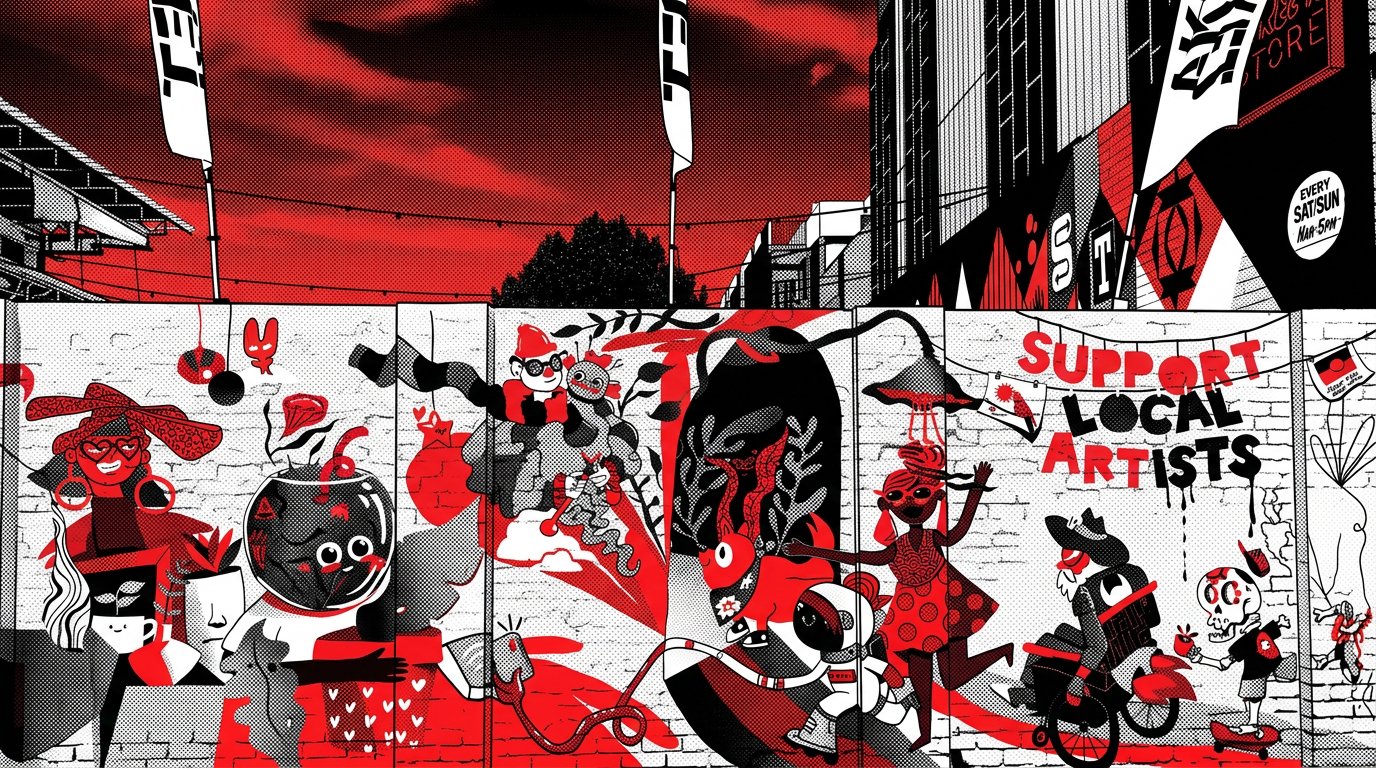
Quiet Riot is presented by The Rose St. Artists' Market, Melbourne's home of independent art and design since 2003.
Founded in a former Fitzroy junkyard and modelled on the artist-run markets of Brooklyn, Berlin and London, Rose St. was built on a simple idea: give emerging and established makers a direct line to the people who buy their work, outside the traditional gallery system. Two decades on, that idea has held. The market still runs every Saturday and Sunday at 60 Rose Street, Fitzroy, showcasing up to 120 artists and designers each weekend, and has hosted the work of thousands of creatives across its history.
Beyond Fitzroy, Rose St. produces and curates markets at the Heide Museum of Modern Art, Queen Victoria Market, the District Docklands, Piazza Italia in Carlton, and the historic Younghusband Woolstore in Kensington. Each project shares the same intent: to platform original work, to back independent practice, and to put artists in the same room as the people who collect them.
Quiet Riot is the natural extension of that work. A national prize that takes the values built at Rose St., independence, craft, direct support for artists, and applies them to a curated annual exhibition in a setting worthy of the work.
The Founders
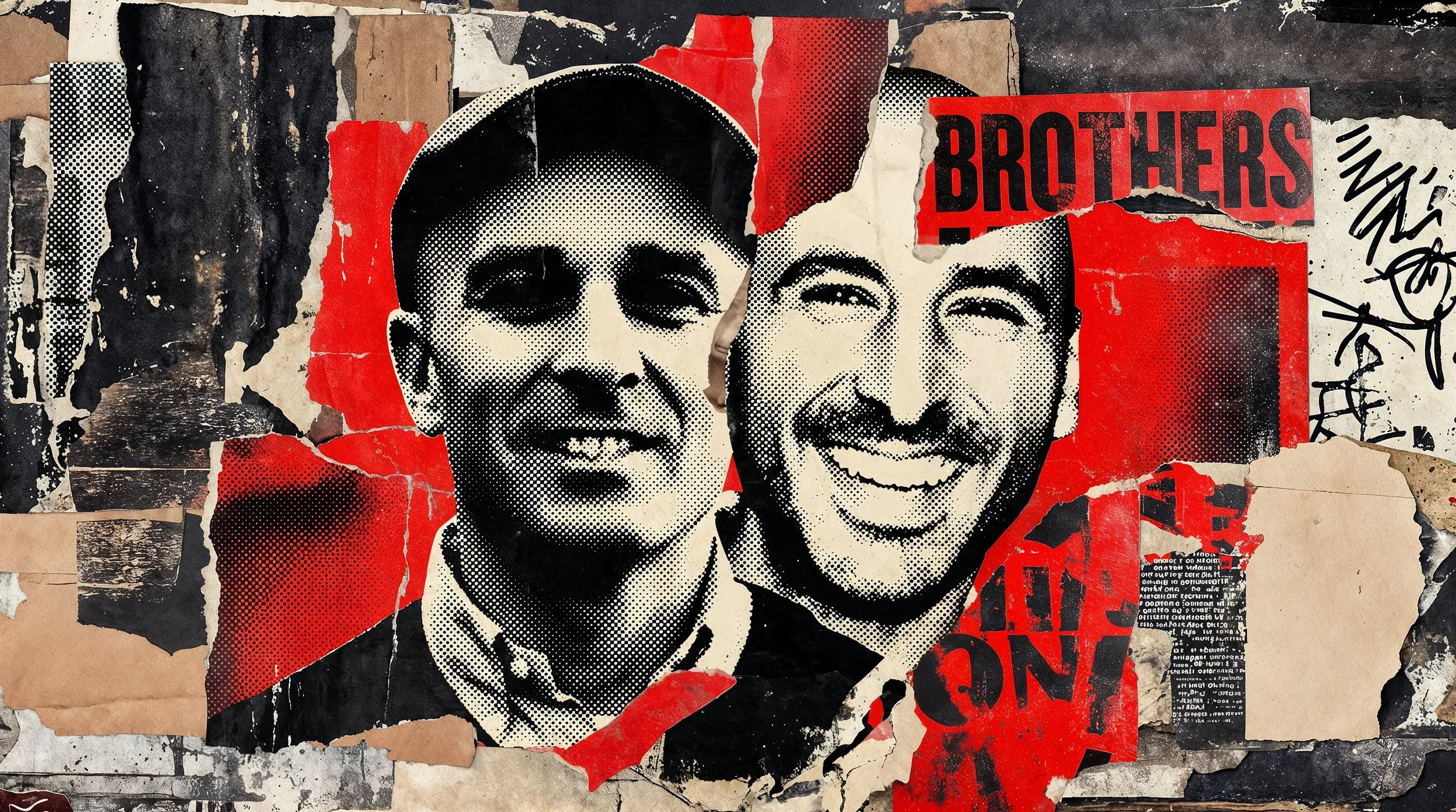
Adam Ferrante
Adam is a sculptor and a graduate of the Victorian College of the Arts, where he received a scholarship that took him to Missouri and later New York. It was there, beneath the Brooklyn Bridge, that he encountered the DUMBO artists' collective, the model that would become Rose St. He brought the idea home to Melbourne in 2003. Adam serves as Program Director, drawing on his arts background to shape the curatorial direction of the market and its broader programming.
Christian Ferrante
Christian co-founded Rose St. alongside his brother Adam, bringing a background in business and marketing to the partnership. As Market Director, he has led the market's growth from a single Fitzroy site to a network of curated markets across Melbourne, and overseen the operational and commercial decisions that have kept independent artist platforms viable through two decades of significant change in the city's creative landscape.